
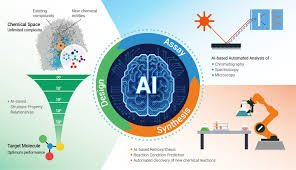
1. Artificial Intelligence has taken another giant leap forward with the introduction of a groundbreaking model that can learn complex tasks entirely without human guidance. Unlike previous systems, which required extensive datasets, training, and supervision, this new AI demonstrates the ability to self-learn and adapt in real-time. Researchers say the breakthrough could mark the beginning of a new era in machine intelligence.
2. What makes this development remarkable is the model’s capacity for autonomous reasoning. Instead of relying on labeled data or predefined rules, the AI is capable of exploring patterns, testing hypotheses, and improving its performance through self-directed trial and error. This mirrors certain aspects of human learning and could revolutionize how we approach AI training.
3. Experts in the field believe the implications are enormous. By removing the bottleneck of human involvement in training, industries ranging from healthcare to robotics could accelerate innovation. A model that can “teach itself” reduces costs, saves time, and opens the door to advanced automation across multiple sectors.
4. In healthcare, for example, such models could analyze medical scans, detect rare diseases, and propose treatments without the need for constant retraining. In robotics, machines could learn to adapt to new environments, terrains, or tasks far faster than current technology allows. The impact could extend to education, logistics, and even creative industries.
5. However, this advancement is not without its challenges. Many experts warn that self-learning AI raises ethical concerns, particularly regarding accountability and control. If a system can teach itself, determining responsibility for its actions becomes more complex. Researchers are already calling for robust frameworks to ensure such systems remain safe, transparent, and aligned with human values.
6. Security is another major concern. Autonomous AI that can outlearn traditional systems may also be capable of developing strategies that humans cannot easily predict. This could pose risks in areas such as cybersecurity, finance, and even geopolitics if not carefully monitored.
7. Despite these concerns, optimism remains high. The new model is still in its early stages, but the initial results show extraordinary promise. Early demonstrations reveal that the AI can perform tasks such as language translation, strategy planning, and even creative problem-solving with minimal external input.
8. As the race for more advanced AI continues, this breakthrough represents a pivotal moment. The coming years will determine whether such technology will reshape industries responsibly or introduce challenges that humanity must navigate carefully. Either way, the age of self-learning machines is no longer a distant possibility—it’s becoming today’s reality.