
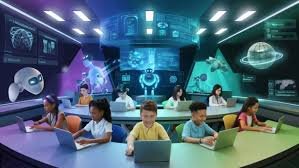
1. Education technology, or EdTech, has taken center stage in 2025, transforming classrooms around the globe. What was once considered an optional add-on is now an essential part of teaching and learning. From AI-powered tutors to immersive virtual reality experiences, digital tools are reshaping the way knowledge is delivered and absorbed.
2. One of the most impactful innovations is the use of Artificial Intelligence in education. AI-driven platforms now analyze student performance in real time, offering personalized study plans and targeted exercises. Teachers use these insights to identify areas where students struggle, ensuring that no learner is left behind.
3. Virtual reality (VR) and augmented reality (AR) are bringing lessons to life like never before. Students can now explore the solar system in 3D, conduct virtual science experiments, or even walk through historical events. These interactive tools make learning more engaging, improving both understanding and retention.
4. Online collaboration platforms have also redefined group work. Instead of gathering in one classroom, students can now work on projects with peers from across the world. Cloud-based tools allow them to share notes, brainstorm ideas, and present findings together, fostering global teamwork skills.
5. Digital textbooks and e-learning platforms are replacing heavy printed materials. With just a tablet or laptop, students can access thousands of books, videos, and research papers. Interactive features such as quizzes, flashcards, and instant translations make learning more efficient and inclusive for students of all backgrounds.
6. Teachers themselves are benefitting from EdTech. Automated grading systems save hours of manual work, while classroom management apps help track attendance, participation, and performance. This allows educators to focus more on guiding and mentoring rather than paperwork.
7. However, the EdTech revolution also raises important challenges. Not all schools have equal access to technology, leading to a digital divide between wealthy and underfunded regions. Additionally, concerns about screen time, data privacy, and over-reliance on technology continue to spark debate among educators and parents.
8. Despite these challenges, the momentum of EdTech is undeniable. Classrooms worldwide are becoming smarter, more interactive, and more personalized than ever before. As digital tools continue to evolve, the future of education promises a more connected and innovative learning experience for students everywhere.